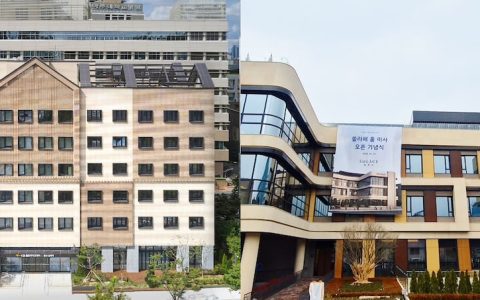
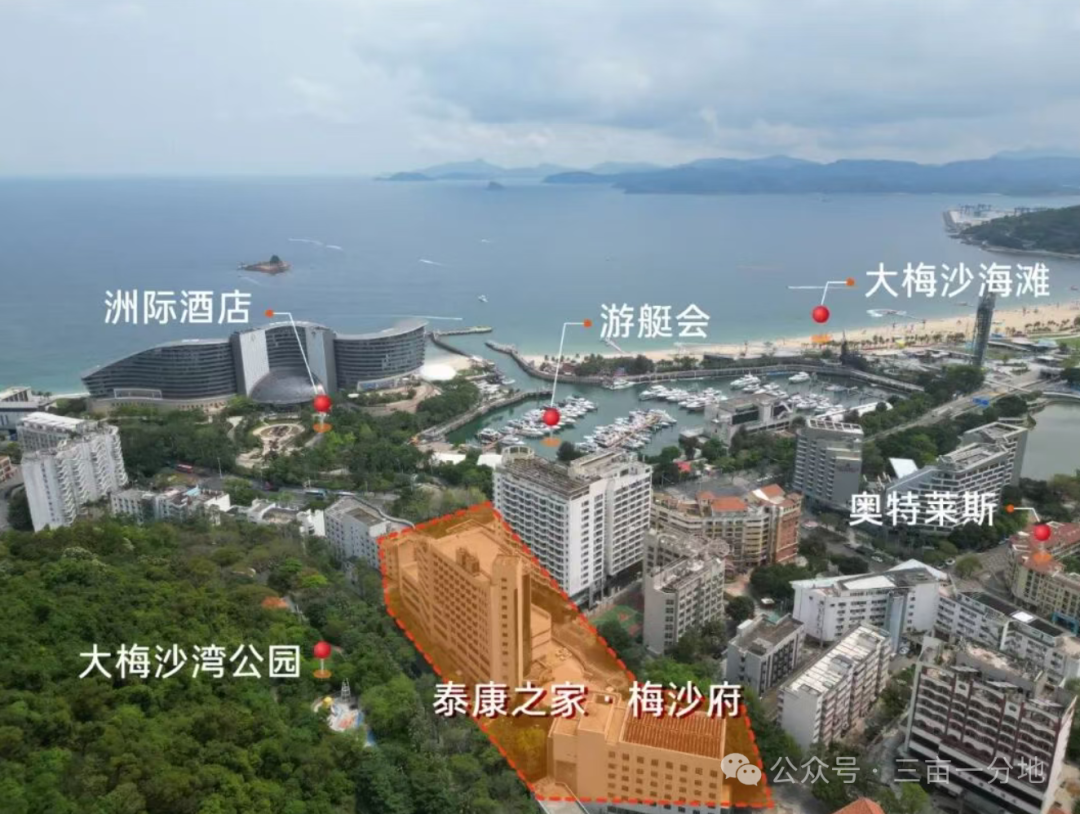
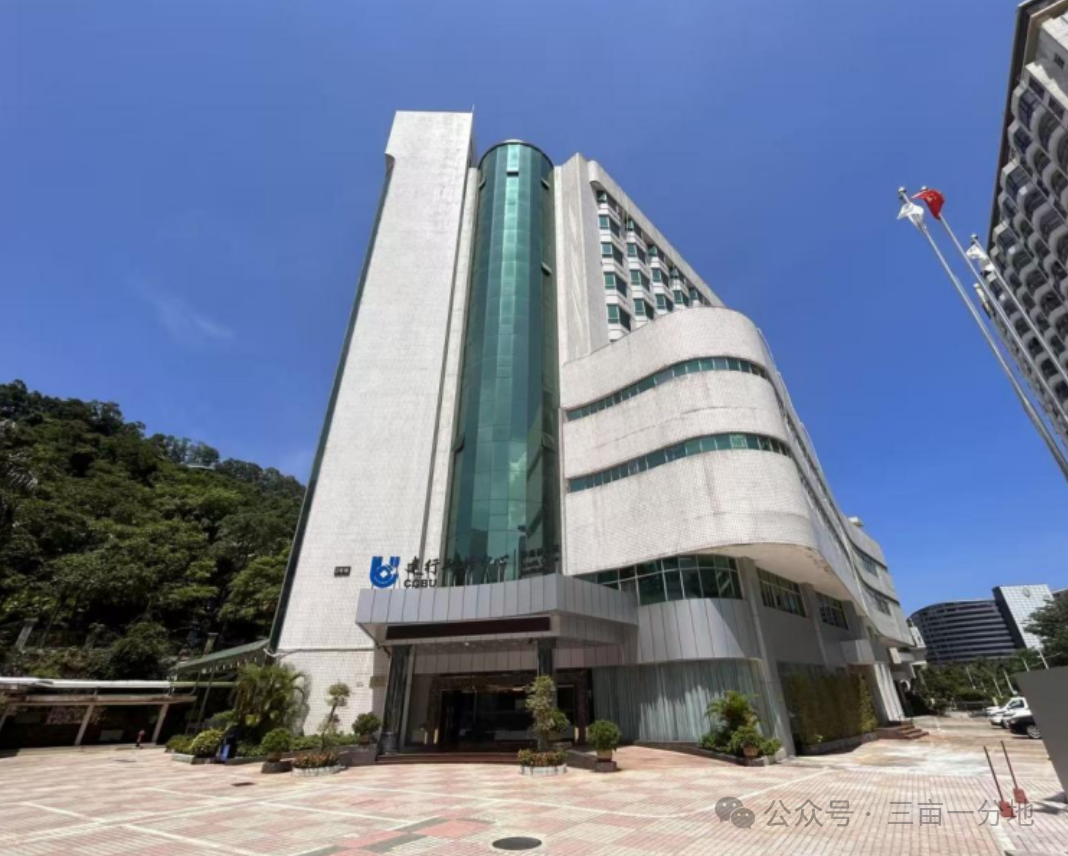
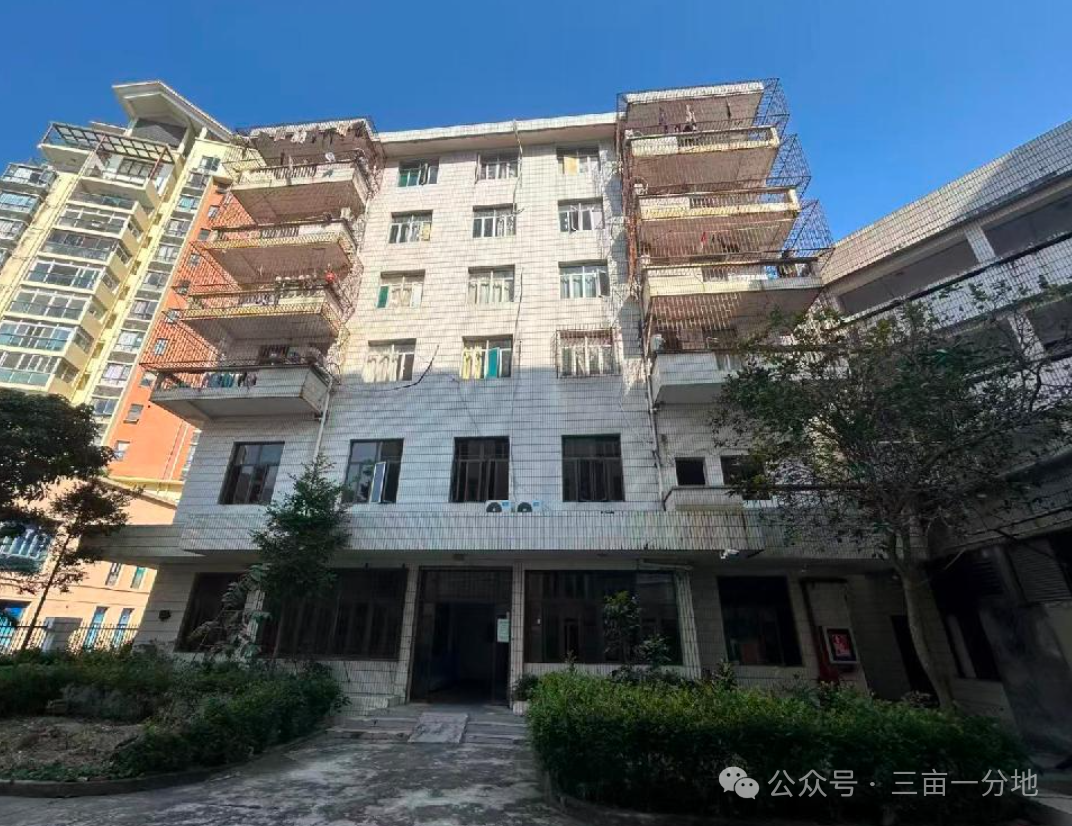
Taikang Community (Taikang Zhi Jia) today officially announced its 48th project in Yantian, Shenzhen—Taikang Community · Meisha Mansion, a 300-bed facility embedded in the Dameisha bay area. This is Taikang’s third project in Shenzhen, following Pengyuan (already opened) and a site in Guangming District.
Project Information
| Dimension | Detail |
|---|---|
| Full project name | Taikang Community · Meisha Mansion |
| Location | Dameisha area, Yantian District, Shenzhen |
| Total GFA | Approx. 18,000 m² |
| Bed capacity | Approx. 300 beds |
| Service model | Independent living, professional nursing care, short-stay respite/travel |
| Common activity space | Approx. 3,000 m² |
| Medical support | Yantian District People’s Hospital (5 km / 15-min drive); green-channel shared with Pengyuan rehabilitation hospital; backed by Shenzhen Qianhai Taikang Hospital |
| Transport | 700 m walk to Dameisha Station on Metro Line 8; 10 km / 20-min drive to Sha Tau Kok border crossing |
| Care system | Taikang International Standard Long-Term Care System (TK-LTC) |
| Opening date | Not yet announced |
| Monthly fee / deposit range | Not yet announced |
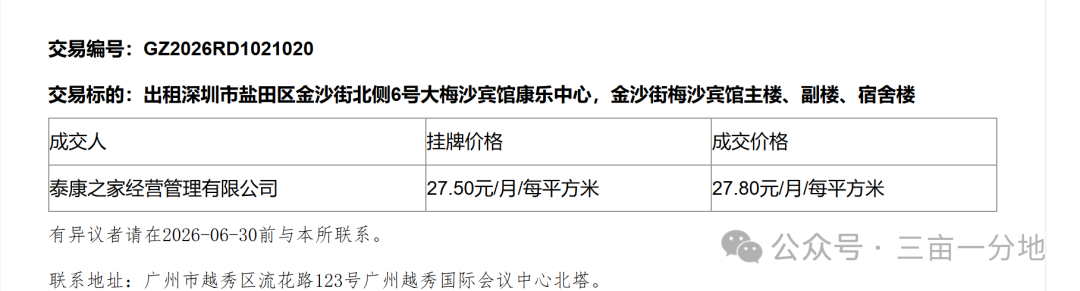
The “Mansion” series comprises Taikang projects in city-core areas that are smaller in scale than its suburban communities—generally 10,000 to 30,000 m². Their property acquisition is not constrained by the original heavy-asset model; the vast majority of Mansion-series projects use leasing, and have landed in cities such as Shanghai, Beijing, Qingdao, Hangzhou and Shenzhen. To some extent this may signal that: 1) acquiring heavy assets in city centers at suitable prices remains very difficult—even when asset prices are not high, substantial retrofit costs are still required; 2) Taikang continues to accelerate its footprint in core-city markets; and 3) Taikang has broken through to a cooperation model with state-owned capital, enabling it to obtain SOE- or government-held existing properties on relatively reasonable terms.
Cross-Border Care Demand Between Shenzhen and Hong Kong
Meisha Mansion sits just 10 km from the Sha Tau Kok border crossing, positioning it directly for the Shenzhen–Hong Kong cross-border elderly care scenario. Pengyuan already hosts over 100 Hong Kong residents as long-term residents; some Hong Kong elderly live there on weekdays and return to Hong Kong on weekends.
In 2024, the Hong Kong SAR Government expanded the “Guangdong Scheme” and “Fujian Scheme,” extending the Old Age Living Allowance to cover mainland elderly care institutions, providing policy support for Hong Kong elderly to age in the north. Benefiting from border commuting advantages, Shenzhen’s Yantian and Dapeng areas have become one of the main destinations for cross-border elderly care for Hong Kong seniors.
Shenzhen Elderly Care Market Background
According to the “Shenzhen Elderly Care Facility Layout Special Plan (2025–2035),” Shenzhen has built 79 subdistrict senior service centers, 188 community senior service stations and 2,099 home-and-community elderly care service stations, achieving full subdistrict-level coverage by 2025 [3].
Shenzhen’s registered elderly population is about 700,000 (year-end 2024 data), but the actual resident elderly population is estimated at over 2 million. Supply of high-end elderly care beds remains relatively limited; public institutions charge a base fee of RMB 3,000–6,000 per month, while high-end private institutions generally charge RMB 10,000 or more per month [4].
National Rollout Progress
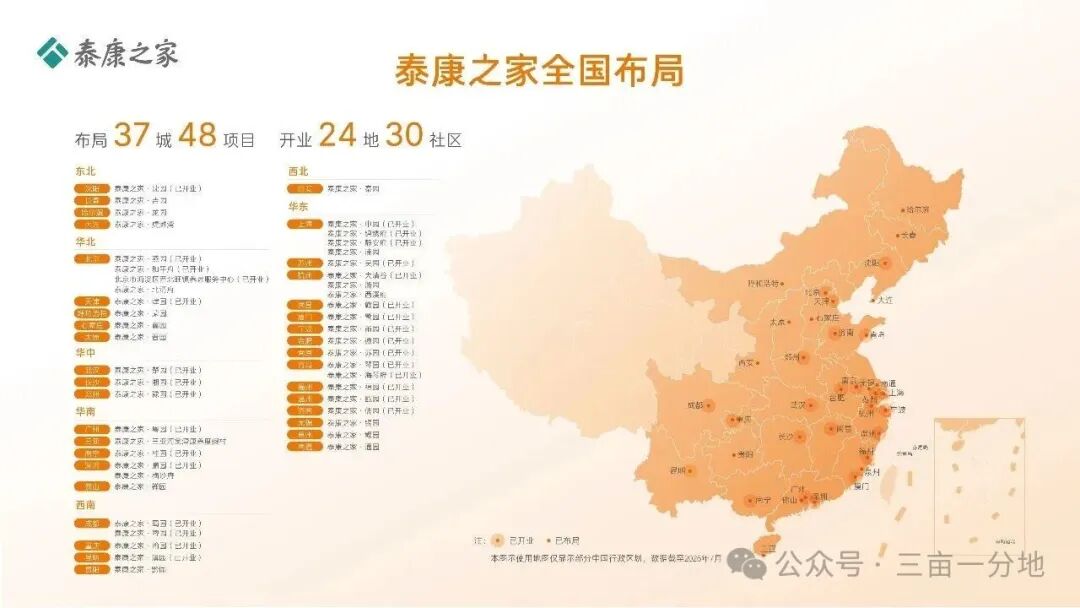
As of July 2026, Taikang Community has laid out 48 projects across 37 cities nationwide, of which 30 communities in 24 cities are already open, with over 22,000 resident members.
Sources: Taikang Community official WeChat account, Guangzhou Property Rights Exchange, etc.
发布者:猫头鹰养老,转载请注明出处:https://www.seniorhousing.cn/en/taikang-shenzhen-yantian-asset-light-mansion-en/